From Warehouse to Brain Trust: Inside Stanford’s New Sustainability Hub
Photography by Marco Zecchin
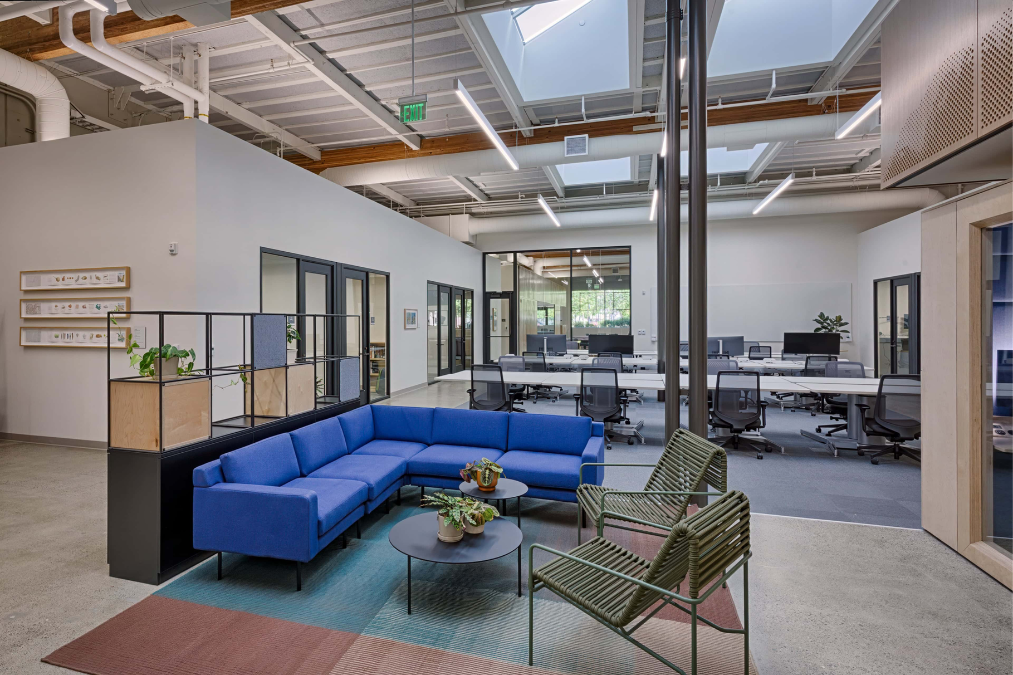
What happens when you take a window-starved concrete publishing warehouse and ask it to host the future of sustainability? You get one very smart adaptive reuse project. For the Stanford Doerr School of Sustainability Accelerator, San Jose–based CAW Architects transformed the last remaining press building on campus into a bright, flexible hub for collaboration. North-facing skylights flood the space with daylight, hospitality-forward lounges encourage connection, and clever material moves quietly pull double (and triple) duty. It’s a project that proves sustainability isn’t just something you study—it’s something you build, reuse, and rethink.
A Warehouse with Good Bones (and One Window)
The original structure was once part of a massive publishing complex that filled an entire campus block at Stanford University. Over decades, most of the building was demolished—leaving behind a concrete warehouse shell with “a single window,” as CAW principal Kaori Abiko puts it. The biggest challenge? Daylight—or, rather, the lack of it. Instead of fighting the building’s industrial DNA, the team leaned in, treating the warehouse as a shell ready for reinvention.
Designing for Speed, Collaboration, and Real-World Impact
The Accelerator’s mission shaped everything in this project from adjacencies to atmosphere. The program needed both informal, day-to-day workspaces and a more formal “living room” for hosting partners beyond the university—policymakers, industry leaders, investors, you name it.
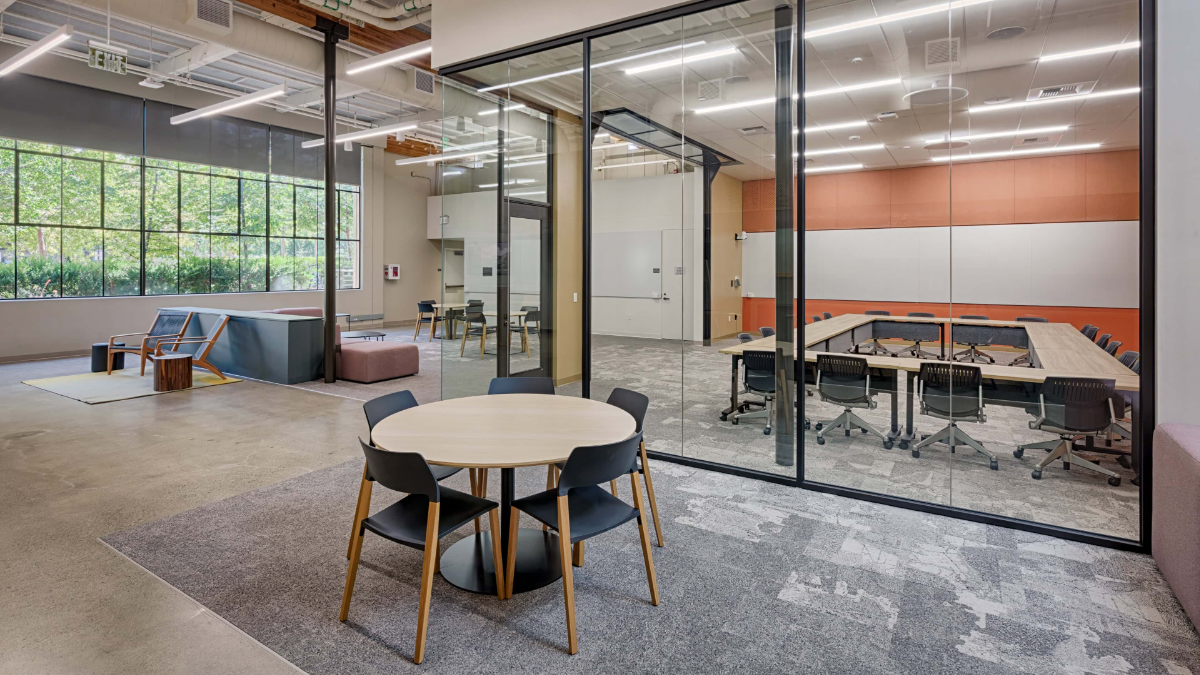
Because the footprint was fixed, early decisions around flexibility were key. Large conference rooms were designed to expand for events without triggering a change of use—an architectural chess move that required serious foresight.
Let There Be (North-Facing) Light
Skylights became the project’s not-so-secret weapon. Large, north-facing skylights bring diffused daylight deep into the building—especially the previously dark half of the warehouse—without glare or heat gain. Bonus: This strategy avoided a mandatory seismic upgrade.
“With the added sunlight,” Kaori explains, “the back half of the warehouse is a bright destination at the end of a long windowless space.” Translation: No more dungeon vibes.
Front of House, Back of House—Theatrically Speaking
Borrowing language from theater design, CAW divided the plan into front-of-house collaborative zones and back-of-house focused workspaces. Acoustic and security needs required separation. And transparency was non-negotiable. A glassy division maintains a clear sightline from entry to workspace, creating connection without chaos. You’re always aware of activity—even if not directly a part of it.
Hospitality as a Design Strategy
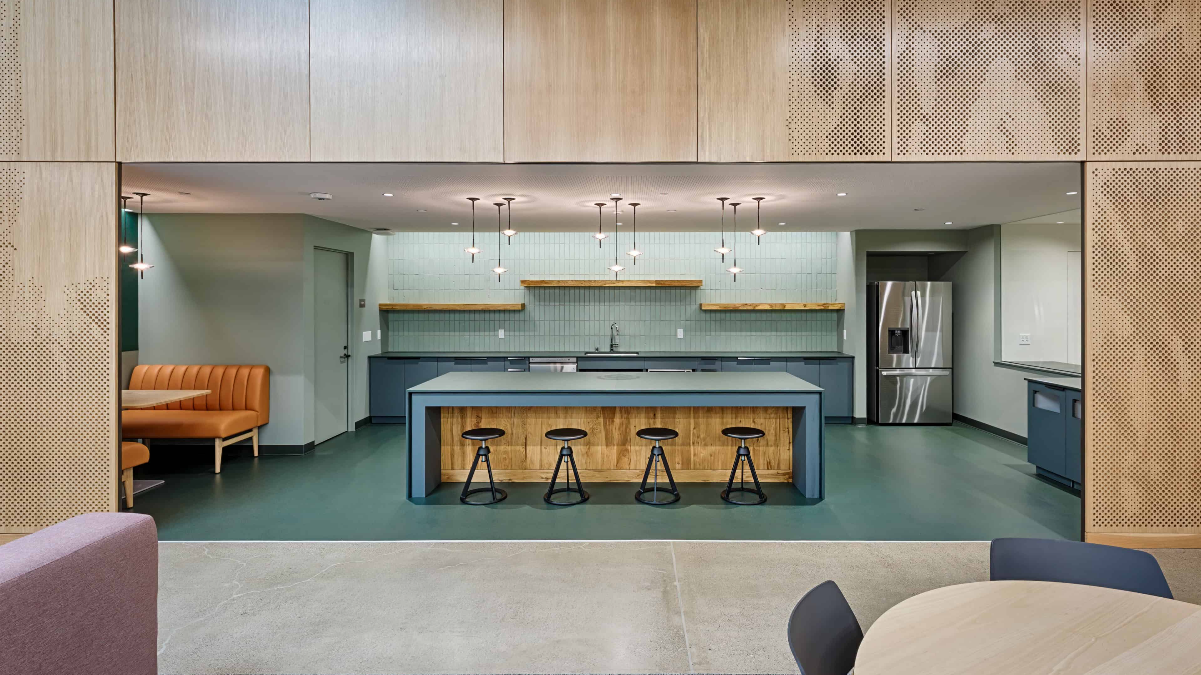
The lounge and kitchen aren’t afterthoughts; instead, they’re central to how the space works. These areas scale down the formality of being on campus and create a welcoming, human-scale environment for meaningful conversations.
As Kaori notes, the goal was to make external partners feel comfortable enough to stick around, chat, and collaborate—because big sustainability ideas don’t always happen in boardrooms.
Walls That Work Overtime
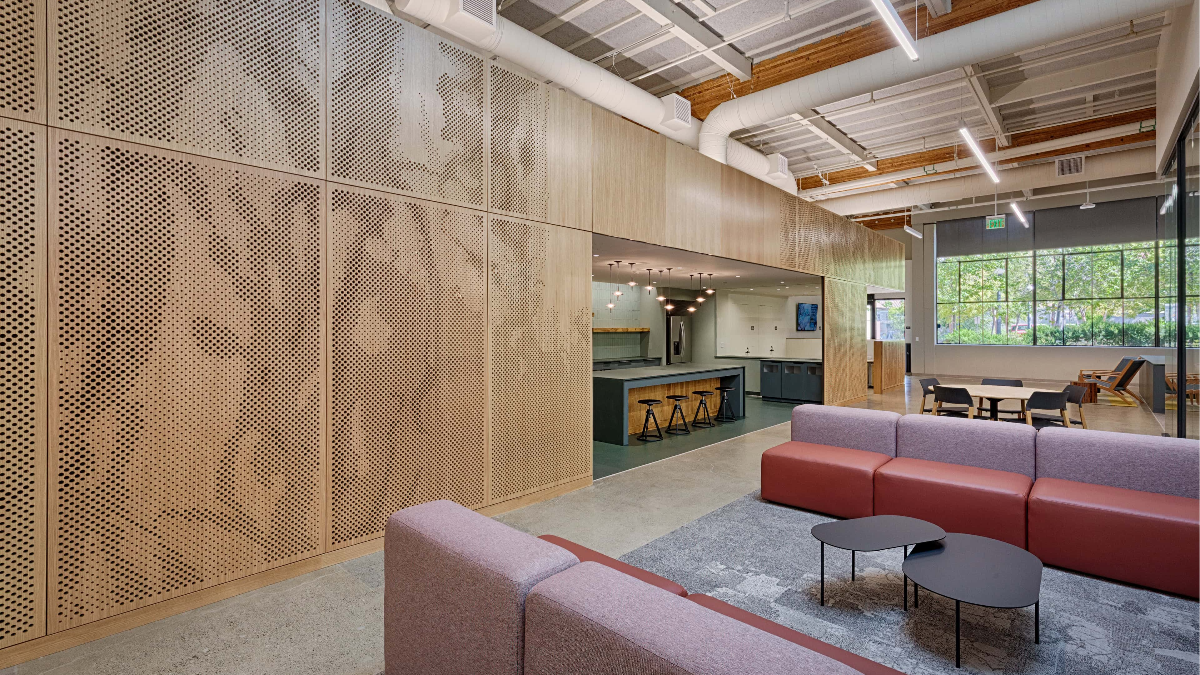
One of the project’s quiet MVPs? The perforated wood walls. They act as acoustic panels, visual screens, and warm design features—all while telling a story.
The patterns are custom and incredibly site-specific: The lobby references a kelp-forest array at Stanford’s Hopkins Marine Station, while the back-of-house wall depicts the iconic Stanford Dish and surrounding hills. Decorative and didactic? We love an overachiever.
Adaptive Reuse, Right on Time
Beyond aesthetics, the project is a strong case study in sustainable reuse. Keeping the existing structure dramatically reduced embodied carbon. Operational upgrades—like increased roof insulation (R-46), low-E window film, skylights, and an electrified HVAC system integrated with the campus hot-water loop—further lowering the building’s footprint.
“One of the best ways to reduce a project’s carbon footprint is to reuse an existing building,” Kaori says. And honestly? This warehouse has never looked better.
—Murrye Bernard