NYC Pokémon Store Makes Collecting an Art Form
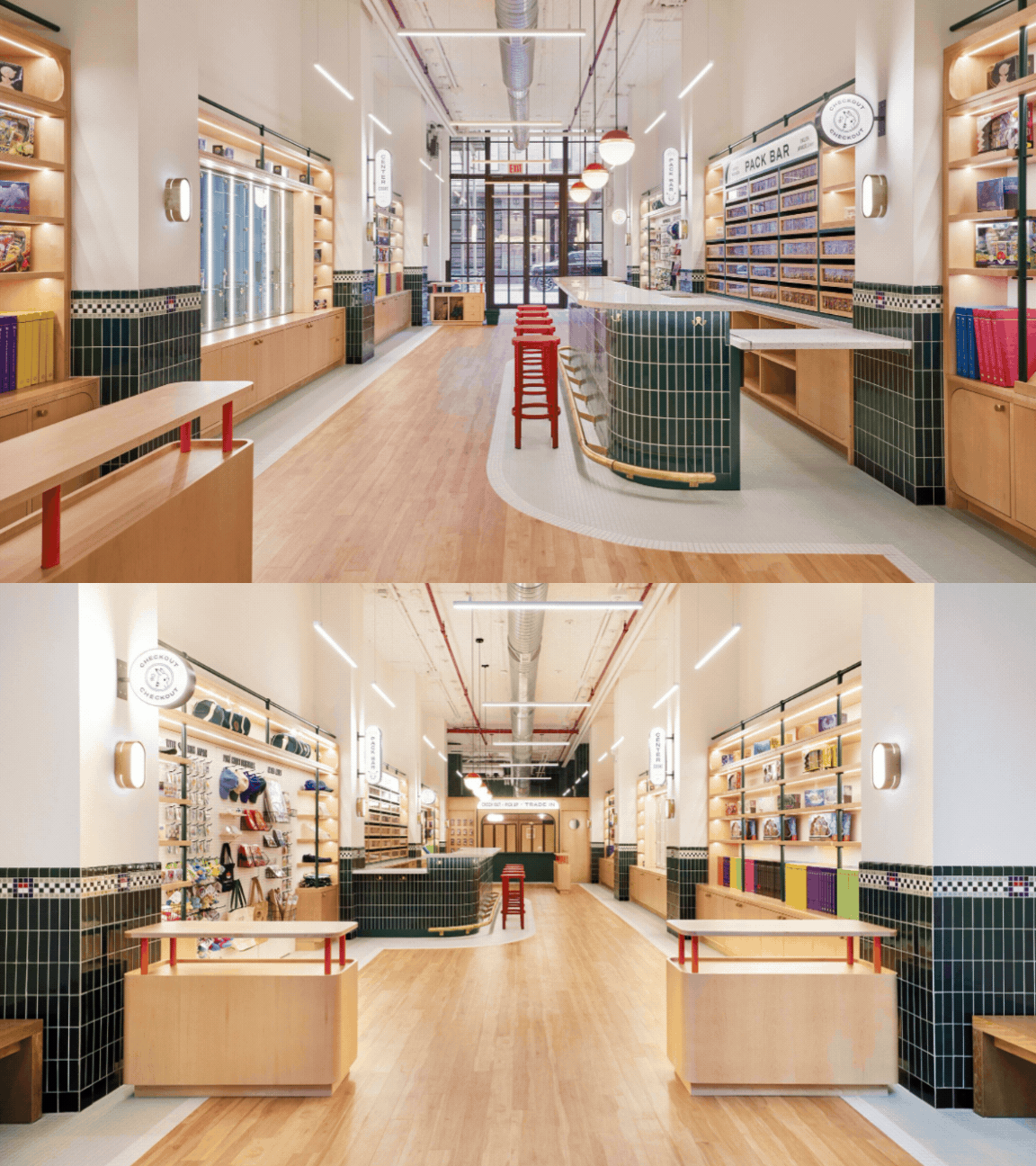
Photography by Erik Bernstein
For those of you with an elementary school-aged kid, you might know the phenomenon that is Pokémon—the ’90s Nintendo Game Boy release that celebrated its 30th anniversary on Feb. 27, 2026. But even if you know it, you may not fully grasp the ritualized culture of researching, collecting, and trading Pokémon cards. My almost 8-year-old was obsessed a few months back. And though he claimed he was “over it” by the time we took him to Poké Court, the new Pokémon store in New York’s Meatpacking District, the experience immediately rekindled his fascination with the strange little Japanese creatures at the center of it all.
The flagship is the debut project from GAMPworks, founded by designers Priscilla Auyeung and Maxine Gao. The 2,000-square-foot space in Manhattan evolved from a tiny, appointment-only Pokémon shop hidden inside a Chelsea office building in 2023. After a popular one-weekend pop-up in SoHo in 2024, founder Courtney Chin expanded into this permanent location, which opened in November 2025.

Inside, the design balances the neighborhood’s industrial character with a restrained Japandi sensibility. The long, linear footprint is organized around the geometry of a sports court—a conceptual move that references competition, play, and the store’s name. Warm wood flooring reminiscent of a basketball court grounds the space, while exposed ductwork preserves the building’s industrial honesty overhead.
That conceptual clarity is concentrated at the Pack Bar, the store's anchor. Here, “Packtenders” present buyers with a menu of card packs ranging from single digits to well into the hundreds. The counter, fabricated from recycled plastics, introduces material contrast within the otherwise restrained palette. Dark green subway tiles wrap its base and extend along the lower third of the retail floor walls, creating a continuous horizontal line throughout the space. Brass detailing—in a footbar and flanking sconces—adds moments of polish.
Graphic expression is handled with care. Custom signage and a hand-painted mural by graphic designer Lauren Sun introduce visual identity without disrupting the interior’s compositional restraint.

At the front of the store, upholstered banquettes double as the Ripping Corner, transforming seating into an active ritual zone. Here, customers tear into newly purchased packs, assess their pulls, and immediately preserve prized cards in sleeves. The placement is strategic: Anticipation and spectacle unfold directly within view of incoming visitors, making collecting a visible performance rather than a private act.
Deeper into the space, rear display walls house single cards in binders alongside rare pieces secured behind locked glass, mimicking the visual language of a jewelry boutique. Maple drawers beneath the cases store roughly 11,000 trading card packs. Linear pendant lights cast an even glow on the displays, reinforcing the gallery-like presentation, while spherical pendants above the Pack Bar quietly echo Poké Ball geometry.

Beyond the visible retail floor, a VIP lounge clad in walnut millwork and deep green walls is reserved for serious collectors, operating as a quieter environment for high-value exchanges.
My son, meanwhile, remained exactly where the design intends most visitors to linger—up front on the banquettes—fully absorbed in tearing into his $20 pack.
—Danine Alati